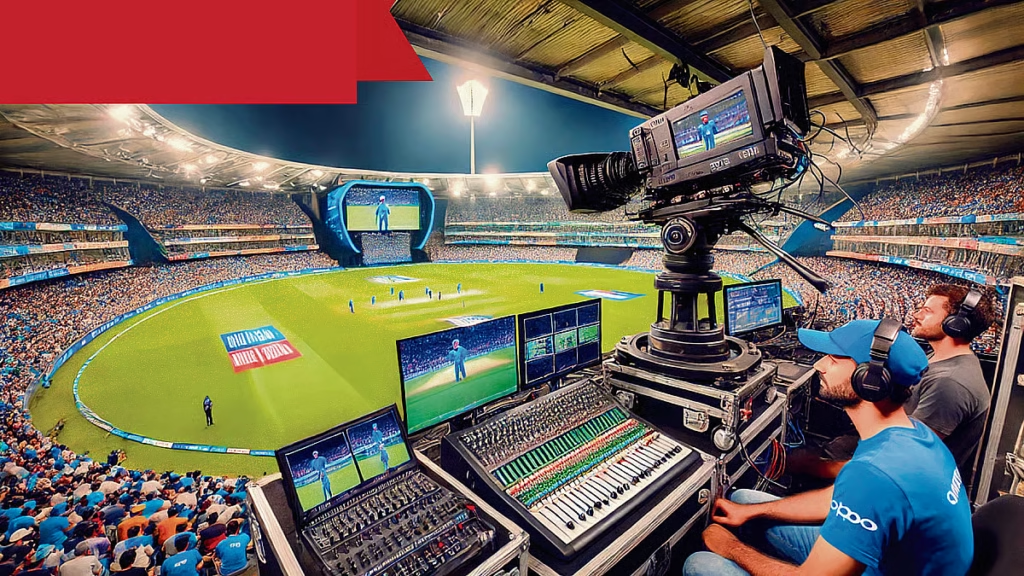
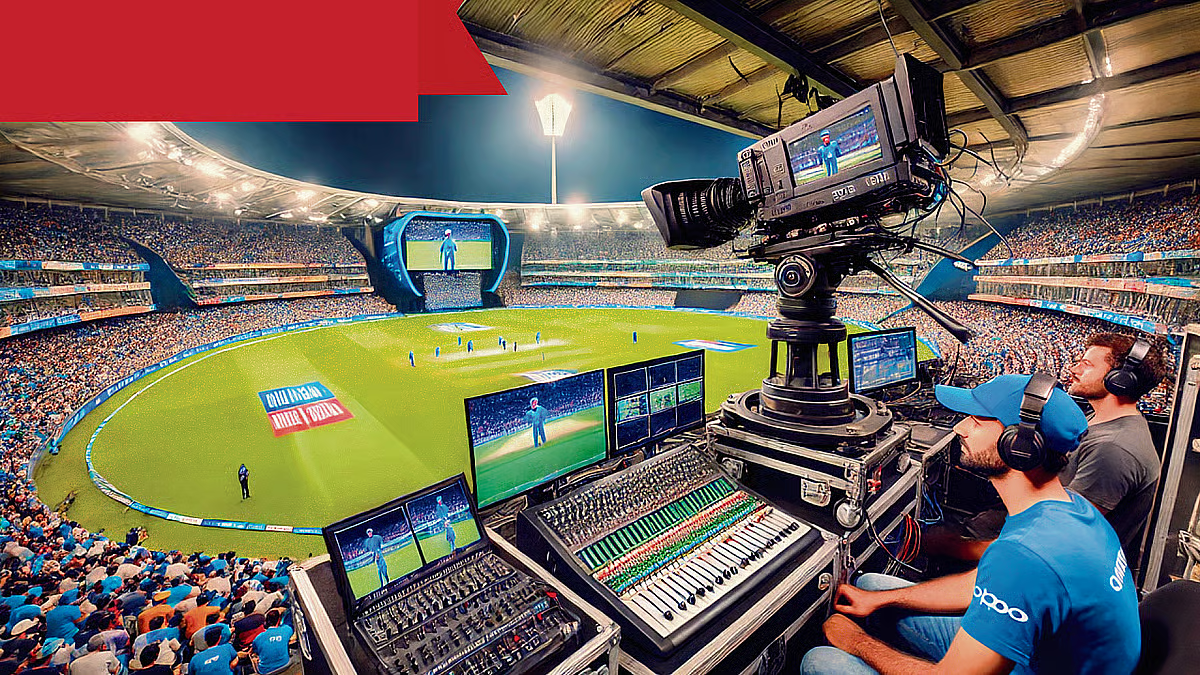
Sports have always been about competition, excitement, and the connection between athletes and fans. But the way people watch sports has changed dramatically over the past century. What was once experienced mainly through newspapers, radio, and scheduled television broadcasts can now be watched through smartphones, websites, streaming platforms, social media, and connected devices.
Sports broadcasting has evolved alongside technology. Every major technological development has changed the relationship between sporting events and their audiences. Radio brought live commentary into people’s homes. Television allowed fans to actually see the action. Satellite broadcasting made international sports coverage possible. Cable television created dedicated sports channels. The internet introduced online streaming, while smartphones and social media made sports available almost anywhere.
Today, fans are no longer simply watching a game. They can follow live statistics, watch highlights, interact with other fans, receive notifications, replay important moments, and follow athletes through social media—all while the event is happening.
The Early Days of Sports Broadcasting
Before electronic broadcasting became popular, fans depended heavily on newspapers and word of mouth for sports information.
Newspapers published match results, player performances, tournament reports, and analysis. However, readers often had to wait until the next edition to learn what happened.
Radio changed this experience.
When sports began appearing regularly on radio, fans could listen to matches as they happened. Commentators described the action and created a sense of excitement for people who could not attend the event.
Radio was particularly important because it allowed sporting events to reach large audiences without requiring fans to travel to a stadium.
For the first time, people could experience a major sporting event almost as it happened from their own homes.
Television Changed Everything
Television created one of the biggest transformations in sports broadcasting.
Instead of listening to a commentator describe the action, viewers could actually see the athletes competing.
This made sports much more visually engaging.
Fans could see goals, runs, races, celebrations, reactions, and important moments.
Television also introduced new production techniques. Cameras could be positioned around stadiums to provide different perspectives.
Broadcasters could replay important moments and show close-up views.
Over time, sports became not only competitions but also television entertainment.
The Growth of Satellite Broadcasting
Satellite technology allowed sports broadcasts to reach audiences across much larger geographical areas.
A major sporting event could be transmitted from one country to another.
This helped international competitions become global entertainment.
Events such as the Olympics, FIFA World Cup, cricket tournaments, tennis competitions, and major motorsport races could attract viewers from around the world.
Athletes who were previously known mainly in their own countries could become international stars.
This also increased the commercial value of major sporting events.
The Rise of Sports Channels
The growth of cable and satellite television led to dedicated sports channels.
Instead of watching sports only when a general television network decided to broadcast them, fans could access channels focused primarily on sporting content.
These channels could show live matches, pre-game analysis, interviews, documentaries, highlights, and post-match discussions.
This created a much larger sports media industry.
Broadcasters began competing for the rights to show popular competitions.
Broadcasting rights became extremely valuable, particularly for major sports leagues and tournaments.
Multiple Camera Angles
Modern sports broadcasts use many cameras.
A football match, for example, may be covered using cameras positioned around the stadium, behind goals, near the sidelines, and in other locations.
Different camera angles provide viewers with a more complete understanding of what is happening.
A traditional television broadcast might show the main action.
Modern broadcasts can switch between wide shots, close-ups, slow-motion replays, and specialized camera views.
This has made watching sports more immersive.
Instant Replay
Instant replay has become a standard part of modern sports broadcasting.
When an important moment occurs, broadcasters can immediately replay it.
This can help viewers understand what happened.
For example, fans can watch a goal again, see how a ball crossed a boundary, or observe a close finish in a race.
Slow-motion technology has made these replays even more detailed.
Replay technology has also influenced officiating in many sports.
Technology and Refereeing
Sports broadcasting technology is now closely connected with officiating.
Football uses systems such as VAR to assist referees in reviewing certain decisions.
Cricket uses technologies such as ball-tracking and replay systems to assist with decisions.
Tennis has introduced electronic systems to help determine whether balls are inside or outside the court.
These technologies demonstrate how broadcasting equipment can become part of the sporting experience itself.
Cameras and sensors are no longer used only to entertain viewers. They can also provide information to officials.
The Internet Changed Sports Broadcasting
The internet introduced another major transformation.
Sports no longer had to be watched exclusively through television.
Websites began offering live scores, match reports, statistics, video highlights, interviews, and other content.
Fans could follow games online even when they were away from their televisions.
This made sports coverage more flexible.
A person could check the score from a computer at work or follow a match through a mobile website while traveling.
The Rise of Live Streaming
Streaming has changed sports broadcasting significantly.
Instead of downloading a complete video or waiting for a television broadcast, viewers can watch content through an internet connection.
Streaming allows sports organizations and broadcasters to reach audiences directly through websites and applications.
Fans can watch certain competitions on computers, smartphones, tablets, smart televisions, and other connected devices.
This has reduced the dependence on traditional television for many viewers.
Smartphones Changed the Experience
Smartphones have made sports more accessible than ever.
Fans can receive notifications about goals, wickets, scores, injuries, transfers, and other important events.
They can watch highlights.
They can check statistics.
They can follow live commentary.
They can communicate with other fans.
They can follow athletes and teams on social media.
A sports fan no longer needs to sit in front of a television to remain connected to a competition.
Social Media Became Part of Sports Broadcasting
Social media has completely changed how sports information spreads.
In the past, fans depended on broadcasters and newspapers to provide sports news.
Today, teams, leagues, athletes, journalists, and fans can publish information directly.
A player can post an update to millions of followers.
A team can announce news instantly.
Fans can share clips and discuss important moments.
Social media has therefore made sports broadcasting more interactive.
The audience is no longer simply consuming information. Fans can also participate in conversations and create their own content.
Short-Form Sports Content
Another major change is the popularity of short-form video.
Instead of watching an entire match, some fans prefer short clips showing goals, wickets, skills, celebrations, interviews, or important moments.
This has encouraged sports organizations and broadcasters to create content specifically for digital platforms.
Short videos can introduce sports to people who may not have time to watch complete matches.
They can also help younger audiences discover athletes and competitions.
Live Statistics
Modern sports broadcasts provide much more information than simply showing the action.
Viewers can see statistics while watching a match.
In cricket, broadcasts may show batting averages, bowling speeds, run rates, and other information.
In football, viewers may see possession statistics, shots, passes, player distances, and other data.
In motorsport, viewers can follow lap times, tyre information, pit stops, and race positions.
Statistics can make the viewing experience more informative.
Personalized Sports Experiences
Digital platforms can increasingly personalize content.
A fan may follow a particular team or athlete and receive updates specifically related to them.
Instead of receiving every piece of sports news, viewers can choose what they want to follow.
This is very different from traditional broadcasting, where everyone watching the same television channel generally received the same program.
Personalization gives fans greater control over their sports experience.
The Growth of On-Demand Content
Traditional television required viewers to watch programs at specific times.
Digital platforms introduced on-demand viewing.
Fans can watch highlights, interviews, documentaries, and other sports content when they have time.
This has changed expectations.
People increasingly expect content to be available when they want it.
On-demand access is particularly useful for international audiences who may live in different time zones.
Sports Broadcasting Became Global
Technology has made sports increasingly international.
A football fan in Asia can follow European competitions.
A cricket fan in Europe can follow matches taking place in South Asia.
A tennis fan can follow tournaments happening on another continent.
Streaming, social media, and online news have removed many geographical barriers.
This global reach has increased the popularity of sports and created international fan communities.
The Business of Broadcasting
Sports broadcasting is also a major business.
Television networks, streaming platforms, advertisers, sponsors, sports leagues, and teams all participate in the sports media ecosystem.
Broadcasting rights can generate significant revenue for sports organizations.
Popular competitions attract large audiences, which makes them valuable to advertisers.
This revenue can help teams and leagues invest in athletes, stadiums, training facilities, and other areas.
As streaming grows, competition for sports broadcasting rights has become increasingly important.
Challenges of Modern Sports Broadcasting
Although modern broadcasting provides many advantages, it also creates challenges.
Streaming requires reliable internet access.
Some sports content may be divided across different platforms, making it difficult for fans to know where to watch.
Broadcasting rights can also become expensive.
There are concerns about subscription costs.
Another challenge is misinformation.
Because social media allows information to spread quickly, incorrect sports news can reach large audiences before it is verified.
Fans therefore need to consider the reliability of sources.
The Future of Sports Broadcasting
The future of sports broadcasting will likely become even more interactive.
Technologies such as virtual reality, augmented reality, artificial intelligence, advanced statistics, and personalized streaming could change how fans experience sporting events.
Virtual reality could potentially allow fans to experience games from different perspectives.
Artificial intelligence could help generate personalized highlights.
Advanced data systems could provide deeper analysis of player and team performance.
Interactive broadcasts could allow fans to choose camera angles, statistics, and additional information.
These developments could make sports viewing more personalized than traditional television broadcasting.
Conclusion
Sports broadcasting has changed from simple newspaper reports and radio commentary into a highly advanced digital experience.
Radio allowed fans to hear live events. Television allowed them to see the action. Satellite broadcasting connected international audiences. Cable created dedicated sports channels. The internet introduced online coverage and streaming. Smartphones and social media made sports information available almost everywhere.
Today, fans can watch live matches, replay important moments, follow statistics, receive notifications, communicate with other fans, and follow athletes directly.
The biggest change is that sports broadcasting is no longer a one-way experience.
Fans are no longer just watching sports—they are interacting with them.
The future will likely bring even more personalized and immersive experiences. As technology continues to develop, sports broadcasting will continue to evolve, creating new ways for fans around the world to connect with the games and athletes they love.
“Sports broadcasting turned the stadium into a global stage, bringing the excitement of the game to fans everywhere.”
echnology changed sports from something fans watched to something they could experience, interact with, and share.