Introduction
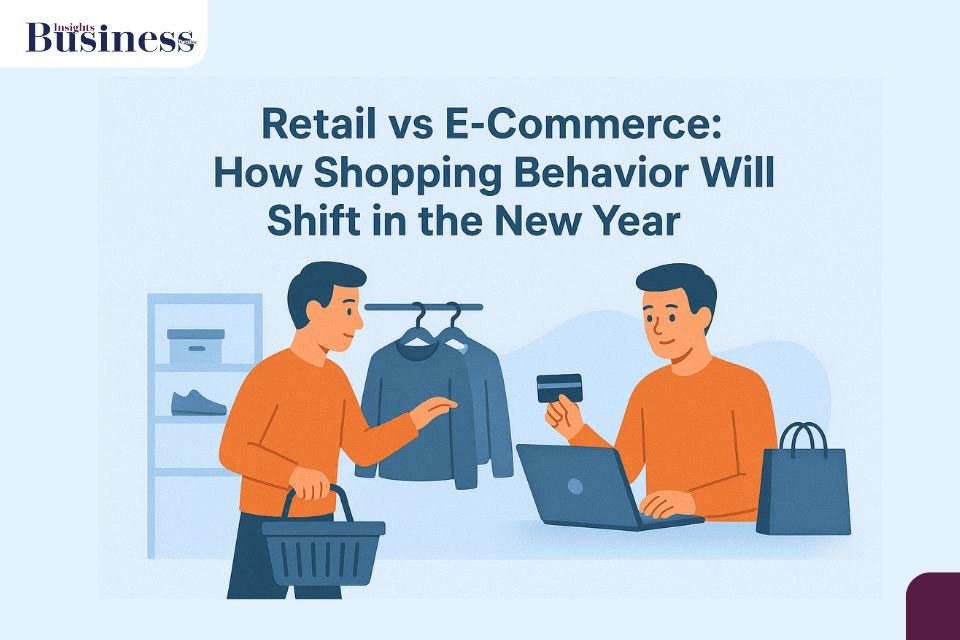
Shopping has always been an important part of everyday life. For many years, buying something meant visiting a physical store, looking at products, speaking with a salesperson, comparing prices, and finally making a purchase at the checkout counter.
Today, the shopping experience looks very different.
With the growth of e-commerce, people can purchase products from their homes, offices, or even while traveling. A customer can search for a product, compare different sellers, read reviews, make a payment, and track a delivery without physically visiting a store.
E-commerce has not completely replaced traditional shopping, but it has changed the way people think about buying products.
The biggest change is convenience. Customers no longer have to depend entirely on store opening hours, physical locations, or the products available on a particular shelf.
At the same time, traditional stores have also changed. Many businesses that once operated only through physical locations now have websites, mobile applications, social media pages, and online delivery services.
E-commerce has therefore created a new relationship between businesses and customers.
What Is E-Commerce?
E-commerce, or electronic commerce, refers to buying and selling products or services through the internet.
Online marketplaces, brand websites, mobile applications, and social-commerce platforms are all examples of e-commerce channels.
A customer can visit an online store, search for a product, select an item, add it to a shopping cart, provide delivery information, make a payment, and receive the product at home.
This process can take only a few minutes.
E-commerce can involve many types of transactions.
Businesses can sell directly to customers.
Customers can sell products to other customers.
Businesses can sell products to other businesses.
Digital products and services can also be purchased online.
Because of this flexibility, e-commerce has become an important part of modern commerce.
Traditional Shopping Before E-Commerce
Before online shopping became common, physical stores were the primary way people purchased products.
Customers had to travel to a store.
They could only purchase products from businesses available in their area.
If someone wanted to compare prices, they might need to visit several different stores.
Product availability was also limited by physical inventory.
If a product was out of stock, customers often had to wait or visit another store.
Shopping also depended on store opening hours.
A customer could not normally purchase a product from a closed store.
This created limitations that e-commerce has significantly reduced.
The Rise of Online Shopping
The growth of the internet created a new way for businesses to reach customers.
Companies began creating websites where customers could view products.
Over time, online stores became more sophisticated.
Customers could search through thousands of products.
They could filter products by price, size, color, brand, rating, and other characteristics.
Online payments became easier.
Delivery networks became more efficient.
Smartphones made shopping even more accessible.
As these technologies improved, e-commerce became a normal part of everyday life.
Convenience Became a Major Advantage
One of the biggest effects of e-commerce is convenience.
Traditional shopping requires physical movement.
Online shopping does not.
A customer can order products from home.
They do not need to travel to a shopping center.
They do not have to search through multiple physical stores.
They can complete a purchase within minutes.
This is particularly useful for people with busy schedules.
Instead of spending several hours shopping, customers can browse products whenever they have time.
Convenience has therefore become one of the most important factors influencing modern shopping behavior.
Shopping 24 Hours a Day
Physical stores usually have specific opening and closing times.
Online stores can operate around the clock.
Customers can browse products early in the morning.
They can shop during lunch breaks.
They can place an order late at night.
This creates greater flexibility.
Businesses can continue receiving orders even when employees are not physically serving customers.
For customers, this means shopping is no longer limited by traditional store schedules.
Global Shopping Became Easier
Traditional shopping is usually limited by geography.
A customer can only easily visit stores within a reasonable distance.
E-commerce changed this limitation.
Customers can discover businesses from other cities and countries.
A small business can potentially reach customers far beyond its local community.
This has created opportunities for businesses that previously depended entirely on local customers.
A small company with a strong online presence can potentially sell products to a much larger audience.
More Product Choices
Physical stores have limited shelf space.
A store cannot display unlimited products.
Online stores do not have the same physical shelf limitations.
An e-commerce website can list thousands or even millions of products.
Customers can search for very specific items.
They can find different brands, models, sizes, colors, and price ranges.
This has increased product variety for consumers.
However, more choices can also create a new problem: decision overload.
Customers may sometimes find it difficult to choose between hundreds of similar products.
Easy Price Comparison
E-commerce has made comparing prices much easier.
A customer can open multiple websites or product pages and compare prices.
They can also compare shipping charges, discounts, ratings, and product specifications.
In traditional shopping, customers may have needed to visit several stores to perform the same comparison.
Online shopping reduces the time required for this process.
This has also increased competition between businesses.
Companies can no longer assume that customers will purchase from them simply because they are nearby.
Customers can quickly discover cheaper alternatives.
Customer Reviews Became Important
Reviews have become a major part of online shopping.
Before buying a product, customers can read what other buyers experienced.
They can examine ratings.
They can read positive and negative reviews.
They can sometimes view customer-uploaded photographs.
This provides information that may not be available in a traditional store.
However, customers also need to be careful because not every online review is necessarily genuine or reliable.
Businesses must therefore focus on building real customer trust.
Product Information Became More Detailed
A physical store usually provides information through packaging, labels, signs, and salespeople.
Online stores can provide much more information on a single product page.
Customers may find product descriptions.
They may see specifications.
They may view photographs and videos.
They may read frequently asked questions.
They may compare different products.
This allows customers to research products before purchasing.
Personalization Changed Shopping
Another major change is personalization.
E-commerce platforms can analyze customer behavior.
For example, an online store may remember products a customer viewed.
It may recommend similar products.
It may display products based on previous purchases.
It may send personalized offers.
This creates a shopping experience that can feel different for every customer.
Traditional stores can also personalize experiences through sales staff and loyalty programs, but digital platforms can analyze enormous amounts of behavioral data automatically.
Mobile Shopping
Smartphones have taken e-commerce even further.
Customers no longer need to sit in front of a computer.
They can shop through mobile applications and websites.
A person can browse products while traveling.
They can compare prices while standing inside a physical store.
They can order something while waiting for an appointment.
Mobile shopping has made e-commerce part of everyday life.
Social Media and Shopping
Social media has also changed the shopping journey.
People can discover products through social platforms.
Influencers and content creators can introduce products to their audiences.
Businesses can showcase products through videos, photographs, demonstrations, and customer stories.
This means advertising and shopping can happen within the same digital environment.
A person may discover a product through content and immediately visit the seller’s website to purchase it.
The Growth of Home Delivery
Delivery is one of the most important parts of e-commerce.
Traditional shopping requires customers to take purchased products home themselves.
E-commerce moves that responsibility to a delivery network.
Customers can receive products at their homes, offices, or other selected locations.
The growth of delivery services has made online shopping much more practical.
Fast delivery has also changed customer expectations.
Many customers now expect businesses to provide clear delivery information and tracking.
Order Tracking
Traditional shopping usually ends at the checkout counter.
Online shopping creates an additional experience after payment.
Customers can receive order confirmations.
They can receive shipping updates.
They can track packages.
They may receive delivery notifications.
This transparency can make the delivery process easier to understand.
Digital Payments
E-commerce has encouraged the growth of digital payments.
Customers can use cards, bank transfers, digital wallets, and other electronic payment methods.
This reduces the need to carry cash.
Digital payments also make online transactions possible.
At the same time, payment security has become increasingly important.
Businesses must protect customer payment information and use secure payment systems.
E-Commerce Changed Customer Expectations
Perhaps one of the biggest changes is customer expectations.
Customers increasingly expect convenience.
They expect detailed information.
They expect competitive prices.
They expect multiple payment options.
They expect delivery tracking.
They expect easy communication.
They may also expect simple return policies.
Traditional businesses have had to adapt to these expectations.
Traditional Stores Are Adapting
E-commerce did not simply destroy traditional shopping.
Instead, it encouraged many physical businesses to change.
Some stores created websites.
Others introduced mobile applications.
Some began offering home delivery.
Some introduced online ordering with physical-store pickup.
This combination is often called an omnichannel shopping experience.
Customers can move between online and offline channels.
For example, someone might research a product online, visit a physical store to see it, and then purchase it online.
Another customer might order online and pick up the product at a nearby store.
The Omnichannel Experience
Modern customers do not necessarily think in terms of “online shopping” and “offline shopping.”
They simply want to purchase products conveniently.
Businesses therefore need to connect their different channels.
A customer might interact with a brand through social media.
Then they might visit its website.
Then they might visit a physical store.
Finally, they might contact customer support.
A strong omnichannel strategy attempts to make these experiences feel connected.
E-Commerce Created New Opportunities for Small Businesses
Traditional retail often required significant investment.
A business needed a physical location.
It needed rent.
It needed store employees.
It needed physical displays.
It needed inventory.
E-commerce can reduce some of these barriers.
A small business can create an online store and begin reaching customers without opening multiple physical locations.
Social media can also provide low-cost ways to promote products.
This has created opportunities for entrepreneurs.
New Types of Businesses
E-commerce has also created business models that were difficult to imagine in traditional retail.
Subscription businesses are one example.
Customers can automatically receive products on a regular schedule.
Direct-to-consumer brands are another example.
Businesses can sell products directly to customers without depending entirely on traditional retail distribution.
Online marketplaces have also connected large numbers of buyers and sellers.
The Impact on Physical Shopping Centers
The growth of e-commerce has changed the role of shopping centers.
Physical stores now compete with online businesses.
Some shopping centers have responded by focusing more on experiences.
Restaurants, entertainment, events, and interactive experiences can give people reasons to visit physical locations.
Shopping is no longer the only purpose of many modern commercial spaces.
Physical Stores Still Have Advantages
Despite the growth of e-commerce, traditional stores remain important.
One major advantage is physical experience.
Customers can touch products.
They can try on clothing.
They can test certain electronics.
They can see product size and quality directly.
They can ask employees questions.
They can take some products home immediately.
These advantages are difficult to reproduce completely online.
Instant Purchases
Physical shopping can provide immediate ownership.
A customer buys something and takes it home.
Online shopping usually involves a delivery period.
Even with fast delivery, customers may still need to wait.
For urgent purchases, physical stores can therefore remain more convenient.
Human Interaction
Traditional shopping also provides human interaction.
A salesperson can understand a customer’s needs.
They can recommend products.
They can answer questions.
They can explain differences between options.
Some customers value this personal experience.
Although online stores use chatbots, reviews, and recommendation systems, human interaction remains important.
The Problem of Returns
One challenge created by e-commerce is product returns.
Customers cannot always examine a product before buying it.
A product may look different from what they expected.
Clothing may not fit.
An electronic product may not meet expectations.
As a result, businesses need effective return processes.
Returns can also increase costs for businesses.
The Problem of Delivery
Delivery creates another challenge.
Customers may experience delays.
Packages can be damaged.
Products can be delivered to the wrong location.
Shipping costs can also affect purchasing decisions.
Businesses therefore need reliable logistics systems.
The Environmental Impact
E-commerce has environmental advantages and disadvantages.
Online shopping can reduce some individual shopping trips.
However, delivery networks require transportation.
Packaging can create additional waste.
Multiple deliveries to individual households can also require significant logistics resources.
Businesses are therefore exploring better packaging and more efficient delivery systems.
Data Became a Major Business Asset
Traditional stores can learn about customers through direct interactions and sales records.
E-commerce platforms can collect much more detailed behavioral information.
They can analyze searches.
They can analyze clicks.
They can analyze product views.
They can analyze purchases.
They can analyze abandoned shopping carts.
This data can help businesses understand customer behavior.
But it also creates privacy concerns.
Customers increasingly care about how their data is collected and used.
Competition Became More Intense
E-commerce has increased competition.
A customer can easily discover alternative sellers.
Businesses must therefore compete on more than just product availability.
They may compete on price.
They may compete on quality.
They may compete on delivery speed.
They may compete on customer service.
They may compete on brand reputation.
This competition can benefit consumers but can also make it harder for businesses to stand out.
The Importance of Digital Marketing
Traditional businesses could rely heavily on physical signs, local advertising, and word of mouth.
Online businesses need digital marketing.
Search engines, social media, email marketing, online advertising, and content marketing can all help businesses attract customers.
This has created new careers and industries around digital commerce.
Search Engines Changed Product Discovery
Customers once discovered products mainly by visiting stores.
Today, search engines play an important role.
Someone might search for the best laptop for students.
They might search for affordable running shoes.
They might search for a specific phone.
Search results can introduce them to products and businesses they have never encountered before.
Search engine optimization has therefore become an important part of e-commerce.
Content Became Part of Shopping
Modern businesses often create content to educate customers.
They may publish product guides.
They may create videos.
They may write comparison articles.
They may publish tutorials.
This content can help customers make purchasing decisions.
Shopping is increasingly connected to information and education.
The Future of E-Commerce
E-commerce will continue to evolve.
Artificial intelligence, augmented reality, faster delivery systems, digital payments, and personalized shopping experiences are likely to influence the future.
Customers may increasingly use virtual tools to visualize products before purchasing.
Businesses may use advanced data analysis to improve inventory management.
Delivery systems may become faster and more efficient.
Physical stores may continue integrating digital technology.
E-Commerce and Augmented Reality
Augmented reality can allow customers to visualize products in their environment.
For example, customers may be able to see how furniture could look in a room.
They may be able to virtually try certain products.
This can reduce some uncertainty associated with online shopping.
It represents another step toward combining digital convenience with physical experience.
The Future May Be a Combination
The future of shopping is unlikely to be completely online.
It is also unlikely to return to a purely physical model.
Instead, online and offline shopping will probably continue to merge.
Customers will choose whichever channel is most convenient for a particular situation.
They may research online and buy in a store.
They may see something in a store and order it online.
They may order online and collect it from a physical location.
The boundaries between the two experiences will continue to become less obvious.
Conclusion
E-commerce has fundamentally changed traditional shopping.
It has made shopping more convenient, expanded product choices, simplified price comparison, introduced personalized recommendations, and allowed customers to purchase products from almost anywhere.
At the same time, it has created new challenges involving privacy, delivery, returns, competition, packaging, and customer expectations.
Traditional stores have not disappeared.
Instead, many have adapted by creating websites, mobile applications, delivery services, online ordering, and omnichannel experiences.
The biggest lesson from the growth of e-commerce is that shopping is no longer defined by a physical location.
Customers want flexibility.
They want information.
They want competitive prices.
They want convenient payment options.
They want reliable delivery.
Most importantly, they want a simple and trustworthy experience.
E-commerce has changed the way businesses sell and the way customers buy.
The future of shopping will likely combine the strengths of both worlds: the convenience and variety of online commerce with the personal experience, immediate access, and human interaction of physical stores.
As technology continues to evolve, shopping will become even more connected, personalized, and convenient.
The question is no longer whether e-commerce will change traditional shopping.
It already has.
The real question is how businesses and consumers will adapt to the next generation of shopping.
“E-commerce did not simply change where people shop; it changed what people expect from shopping.”
Traditional shopping gave customers a place to buy; e-commerce gave them the freedom to shop anywhere, anytime.